CINGS (China Institute x Next Gen Serica) is our joint next-generation leadership community with the China Institute, a global network of young professionals who are committed to building people-to-people relations between the United States and China.
Each month, we sit down with one of 120+ CINGS members to learn more about the young leaders shaping the future of cross-border social & environmental impact. Keep reading to learn about our featured guest, Qi Rosa Zhang!
This interview was completed by Director of Events, Michelle Maiuri.

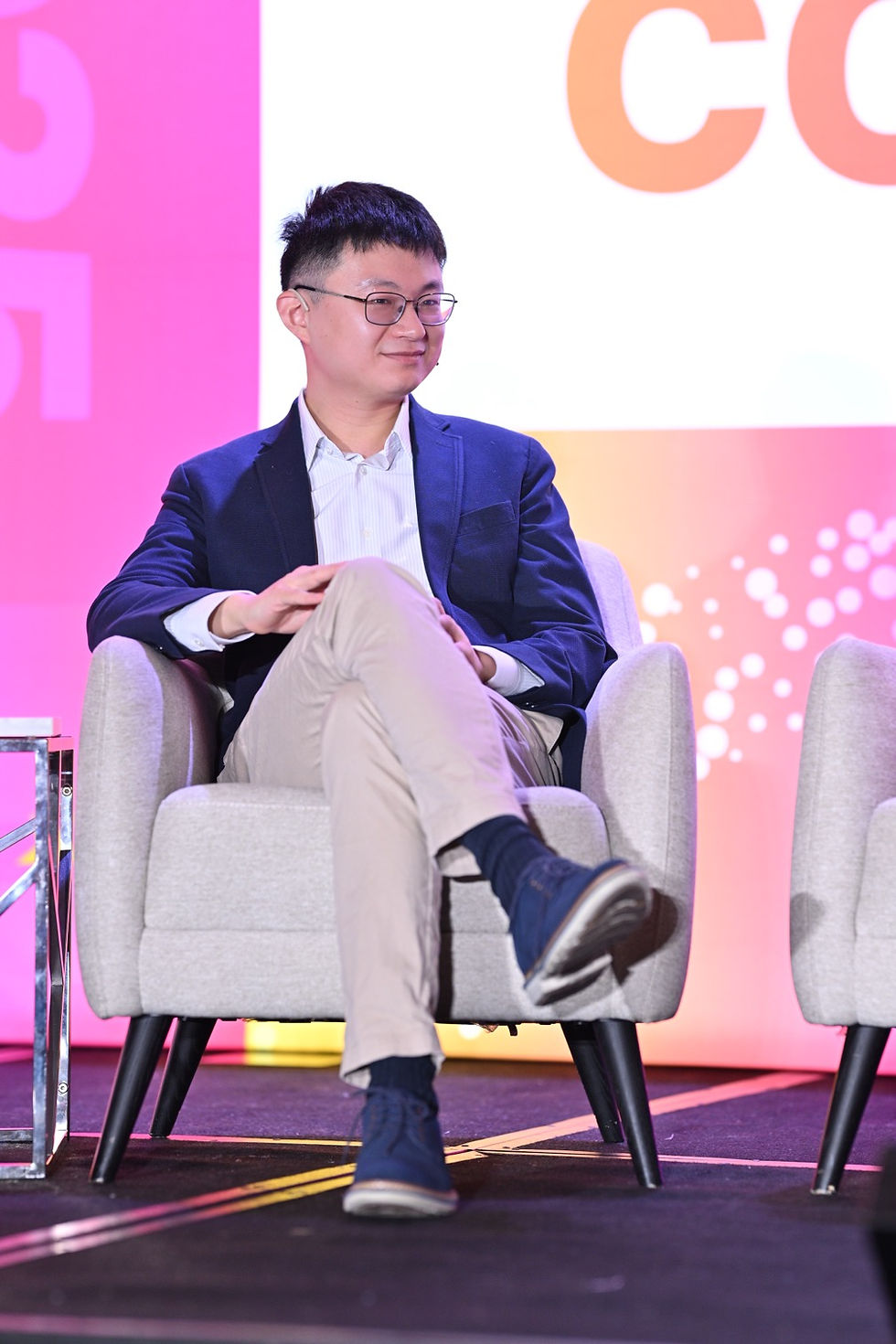
Qi Rosa Zhang
CEO & Founder, Queue Agency
CINGS Member of 2 Years
Location: NYC, Originally from Macau, grew up in Beijing
Favorite NYC Restaurant: Saint Julivert
Favorite Beijing Restaurant: Siji Minfu
SERICA: Can you share the journey that led you to your life in New York City now?
Why New York City? I feel like that's a question a lot of people ask when you meet them here. For me, it's very simple: my career led me to the city. Since graduating college I was in the fashion industry, and New York is the capital, the place to be. It was a very natural decision. My personality and my career both make so much sense here, so I just stayed.
SERICA: What first drew you to the fashion industry?

I've always liked to make things with my hands — I'm a very crafty person in general. I love that I can create something out of nothing. Fashion was actually my second choice; my first was media and communications, but I couldn't really pursue that in China for a lot of reasons, so I came to the States for art school and chose fashion. I was such a big fan of Martin Margiela and that whole experimental design scene out of Antwerp in the late '90s and 2000s — that era was a huge inspiration for me.
My career path is really what brought things full circle. I worked in a few luxury fashion houses after graduation, and then the pandemic hit and I ended up at an e-commerce company selling American brands into China. Marketing and communication became more central to that job, but I was still working closely with fashion brands, just from the outside instead of in-house. I realized I'd always felt something was missing when I was in fashion, and that job showed me I could bring all my skills together — my passion for the industry, but channeled through something I was naturally good at. That was a real moment of realization.
SERICA: You've built a career in marketing and public relations while working with many Asian American and Chinese American brands across fashion, lifestyle, food and beverage, and hospitality. What have you learned about the power of storytelling in shaping culture and community?

My agency is a boutique PR and marketing company, and we mainly work with lifestyle and consumer goods brands. Everything we do centers on content — content marketing, influencer campaigns, making sure we're working with the right creators to get the best return. But at the core, it's about how you tell the story of the brand.
We've noticed a pattern working alongside brands as they grow: a lot of our clients hit huge numbers — hundreds of millions in sales — without much of a marketing budget, just riding a wave on certain channels. But once they're at that size, they come to a small agency like ours because they realize that to get customers to actually recognize the brand, keep returning, and become lifetime consumers, you need the power of storytelling. A trend can be fun for a moment, but trends die out and competitors show up. Storytelling is what gives a brand longevity.
I think Insta360 is a great example of this. The brand first built a strong identity around its 360-degree cameras and became especially good at storytelling through outdoor and adventure content. For a recent campaign introducing the fifth generation of its flagship product, they brought us in as one of their agency partners to help expand that storytelling into more lifestyle focused settings. You can see how intentionally they are growing beyond their original niche. This approach is also reflected in the broader ecosystem they are building across cameras, microphones, and accessories. They are expanding the brand without losing the identity that made the original hero product successful—and that is what strong storytelling allows a brand to do.

SERICA: What do you like working with better, Instagram or TikTok?
They're totally different beasts. Not just because the algorithms differ, or the ad tools and rules are different — the content itself needs to be different. Take TikTok Shop versus Instagram Shop: the right strategy for one is completely different from the other. Instagram Shop tends to focus more on awareness and showing the product, while TikTok Shop leans harder into conversion — pushing you toward a final decision. On Instagram it might be a model wearing the product; on TikTok it's more like a friend of yours wearing it. Every brand and product falls into that customer journey a little differently, so we think about where each platform fits into that map before deciding on a strategy.
SERICA: What inspired you to join CINGS, and what has being part of this community meant for you personally or professionally?
This is my second year. Our previous president sent me an invite out of the blue — we were in the same friend circle and had crossed paths at China Institute events, and I knew he and the programming team were doing great work with CINGS. I was already hosting a lot of community events myself, so when the invite came, I was all in for a group that shared a similar vision.
Professionally, it's been great. I work in a very U.S.-China focused niche, so I'm always keeping track of the relationship, politically and economically. What I love about CINGS is that we're all in a similar age group but from really different professional backgrounds — a lot of people are in tech or finance, which isn't the world I come from. Without CINGS I wouldn't be nearly as plugged into what's happening in other industries, including sustainability, which I've been excited to help with for the Summit. I was actually a speaker at the last Summit, talking about PR and media coverage alongside people focused on journalism and on U.S.-China marketing — it was a great, natural conversation.

SERICA: What is your hot take on U.S.-China relations or the future of U.S.-China engagement that you think more people should be talking about?
My hot take, especially in the consumer goods space, is that we're actually going to see Chinese dominance grow even bigger — just not always labeled as "Made in China." A lot of buyers are choosing products made in China less and less to hit their own sourcing goals, so brands are having to diversify where things are manufactured. I've had clients building factories here in the U.S. and across Southeast Asia. In a way, that pressure has pushed Chinese entrepreneurs to build entire ecosystems outside of China — which I think is actually a good thing. It helps local economies, teaches skills, diversifies where things are made, and Southeast Asia in particular is becoming a major hub for consumer goods because of it.
Nearly five decades since the beginning of reform and opening-up, China’s consumer-goods industry has moved from learning established practices to developing its own systems, standards, and industrial expertise. This is also why I don’t think any “Made in” label should automatically be treated as a benchmark for quality—the ownership, technology, production systems, and expertise behind a product may come from somewhere else entirely. What we are beginning to see now is something that did not really exist before: Chinese companies are increasingly helping to establish industry benchmarks, rather than simply producing goods according to standards created elsewhere. As they build factories and manufacturing networks around the world, they are exporting not only products, but also the knowledge required to manage supply chains, establish production standards, and develop entire manufacturing ecosystems. I see this as a form of manufacturing soft power—one that can shape everyday life through both the products people use and the systems through which those products are made.
SERICA: At Serica, we often talk about the importance of paying it forward and strengthening the Asian diaspora community. What does giving back mean to you, and how do you hope to make an impact through your work and relationships?

I'm a person who loves to host — I'm basically a standard Chinese grandma at heart. But I try to bring that same instinct into my workplace. Early in my career, in the fashion industry, I saw how normal it was for people to be taken advantage of through unpaid work, just because everyone wanted to be part of something glamorous.. Marketing has a lot of the same problem — your first few jobs, you often just aren't paid.
As an entrepreneur now, I want to change that. I make sure my interns get paid market rates — that's one of my rules for myself, and it's my way of paying it forward. We also try to work with clients who understand the importance of sustainable and ethical practices, because if we're helping them with storytelling and branding, we want to be aligned with people who share that vision. It's going to take a long time to shift the norm, but if everyone who's in a position to make a difference starts doing it — even in a small way — that adds up. Maybe the next generation of kids gets paid for their first fashion internship.
One more thing I'd add: I don't think enough young professionals know the benefit of being part of a nonprofit built around something they actually care about. It brings people together and helps you make so much more meaningful connections — even in a city like New York, where you already feel like you have access to amazing people. It has shown me that being part of a community is not only about what you gain from it, but also about the time, knowledge, and support you contribute to others. Joining CINGS has genuinely been one of the best things I've done in my years here. That's something more people should know.
Thank you, Rosa, for your amazing insights!!
More spotlights to come! To learn more about CINGS and their work and upcoming programming, check out their website www.cings.org and follow them on LinkedIn.