Investor, Operator, Arts and Culture Enthusiast
Co-Chair, CINGS Programming Committee
CINGS Member of 3 Years
Where From: Guangzhou, China
Where Now: Los Angeles, CA
Favorite Local Restaurant: Too many: GZ & LA are both their nations’ food capitals!
Currently Listening to/Reading: The Myth of Sisyphus by Albert Camus

This interview was completed by Events Director & CINGS member Michelle Maiuri.
SERICA: Tell us about your journey. What led you from Guangzhou to the U.S. and Robotics?
I was born and raised in Guangzhou, the capital of the Canton province and the historic trade center of the Maritime Silk Route. It is where the first China-U.S. trade route began, when the Empress of China set sail from the Pearl River Delta to New York Harbor on February 22, 1784.
I left my hometown for boarding school in Pennsylvania at age 15 and went to college in Seattle, so I would say I have a bit of both the East Coast and West Coast in me. Seattle was a rising tech hub with many major tech companies, and that's where my interest in technology and what the future could look like first took off. Although I studied liberal arts, I always paid attention to what my STEAM classmates were doing, and one direction that I took interest in was robotics.
Caltech (the California Institute of Technology) was another inspiration and a reason as to why I ended up in LA (Pasadena, to be precise).
Back in 2016, robotics was not the sexiest rising tech. It was believed to be something far off into the future. We took a chance and invested in several robotics and automation startups both in China and the US. Ten years later, it's now one of the biggest investment topic in the Valley. We got in a decade early, and we've seen the full cycle. Now with China catching up on building and innovating for automations, and the whole world is excited. It's a thrilling time to be in it.

SERICA: What do you look for when deciding to back a founder, and what have you learned about separating real innovation from hype?
It connects to ecosystems building and sustainability: everything is connected. Many of our early-stage investments are now enterprises that have been running for ten years and are expanding, and the ones that succeed share one thing, almost without exception. They invest in their people. It sounds like a business cliché, but it's true.
As for AI, I'd push back on the idea that innovation comes from it. The word "artificial" is embedded, and this technology is a tool of algorithm and computation, running on infrastructures that humans created and is maintaining.
This is why it’s interesting to look at China. They understand what it means to “manufacture." Whether its batteries, cooling systems, or data centers that AI ultimately relies on: it is not a question, or a debate on whether there should be regulations on AI usage. Innovation will always come from people. The technology can help us create and work more efficiently.
Even if we reach super-intelligence, I don't believe it will ever surpass human endeavors over the long arc of history. In the same way, I don’t believe robots can take over the world. After all, the program running in all of them is built and decided by humans.

SERICA: You're Co-Chair of the CINGS programming committee. What inspired you to join, and what has this community meant to you?
CINGS is a mission-driven and close-knit community, full of incredible people who share a common vision. Leadership roles here are volunteers roles, on top of everything else we do in our own careers. I do it because I genuinely enjoy bringing our people together. Over the three years I've been in CINGS, members always held spontaneous gatherings in China — my first Chengdu Trip happened in 2024, and Wuhan, Shanghai, Beijing and GBA followed in 2025. They’ve mostly been member-initiated, and have allowed us to combine bonding, city excursion, and meaningful discussions on our mission.

This year we hosted two official events with the China Institute and Serica in China. This included one of the biggest CINGS gatherings held in China yet: conversing with the China Institute’s leadership in Shanghai, highlighting our key Giving Circle programing, and the local organizations that we have supported.
We were also Kunming for two days after Shanghai, hosted by one of our founding members alongside Serica’s very own CEO and Founder, Anla Cheng. These experiences were exceptional. And what I loved is the mix of people that we have here at CINGS, that bridge the gaps: members based purely in the U.S. who've never been to mainland China, members who studied in the U.S. and have lived in China for a decade, and members born and educated in China who work for U.S. organizations. It's a highly curated group of wonderful people making time for in-depth gatherings, and having a lot of fun doing it.

SERICA: What's your hot take on U.S.-China competition and collaboration in AI and robotics?
Two months ago I attended a conference at the Valley and robotics was one of the biggest topics. A speaker was asked about robotics in China and answered with a view from 2019, naming the big legacy industrial players. I thought, Silicon Valley's view of Chinese robotics is so antiquated. In China, robotics is the thing right now, and companies there are fast, and they build well.

This is a problem I see across our Southern California portfolio: for years, you couldn't get the supply chain you need to actualize a great innovation. The U.S. is excellent at software, data, and frontier ideas about what a robot could do. But once you've envisioned it, how do you build it cost-effectively, and make sure it works? That's where China comes in. The idea that "Made in China" means poor quality is simply outdated. It's the standard now. All the batteries in your Tesla are made in China.
The differences between the two sides can be resolved as long as there's communication and bridge building, and that has to come from people who understand both sides.

SERICA: What does giving back mean to you, and how do you hope to make an impact through your investing and your work with CINGS?
CINGS is maybe the third AAPI-related nonprofit I've been involved with, but it’s the only one that has a membership presence in China.

Southern California has the largest Asian American population, and ask anyone there how it feels to be Asian and you'll get a completely different answer than anywhere else in the country. But there are many layers: different immigration challenges, different paths into the diaspora, and on top of that, the Chinese American identity, which is distinct from the broader Asian American one.
It always goes back to giving to the community, especially your local one. So in the U.S., I'm Asian American, and I contribute to strengthening that representation by supporting community organizations like AJSOCAL (Asian Americans Advancing Justice Southern California) and APCF (Asian Pacific Community Fund).
In China, I become a representation of Americans. In both places, the picture people hold is one image, when the reality is so much more granular. New York and California are different, and so are Beijing, Shanghai, Guangzhou, and Chengdu. We do our best to convey those details, and where we can't, we connect on what we share: fashion, food, arts, culture, and family.
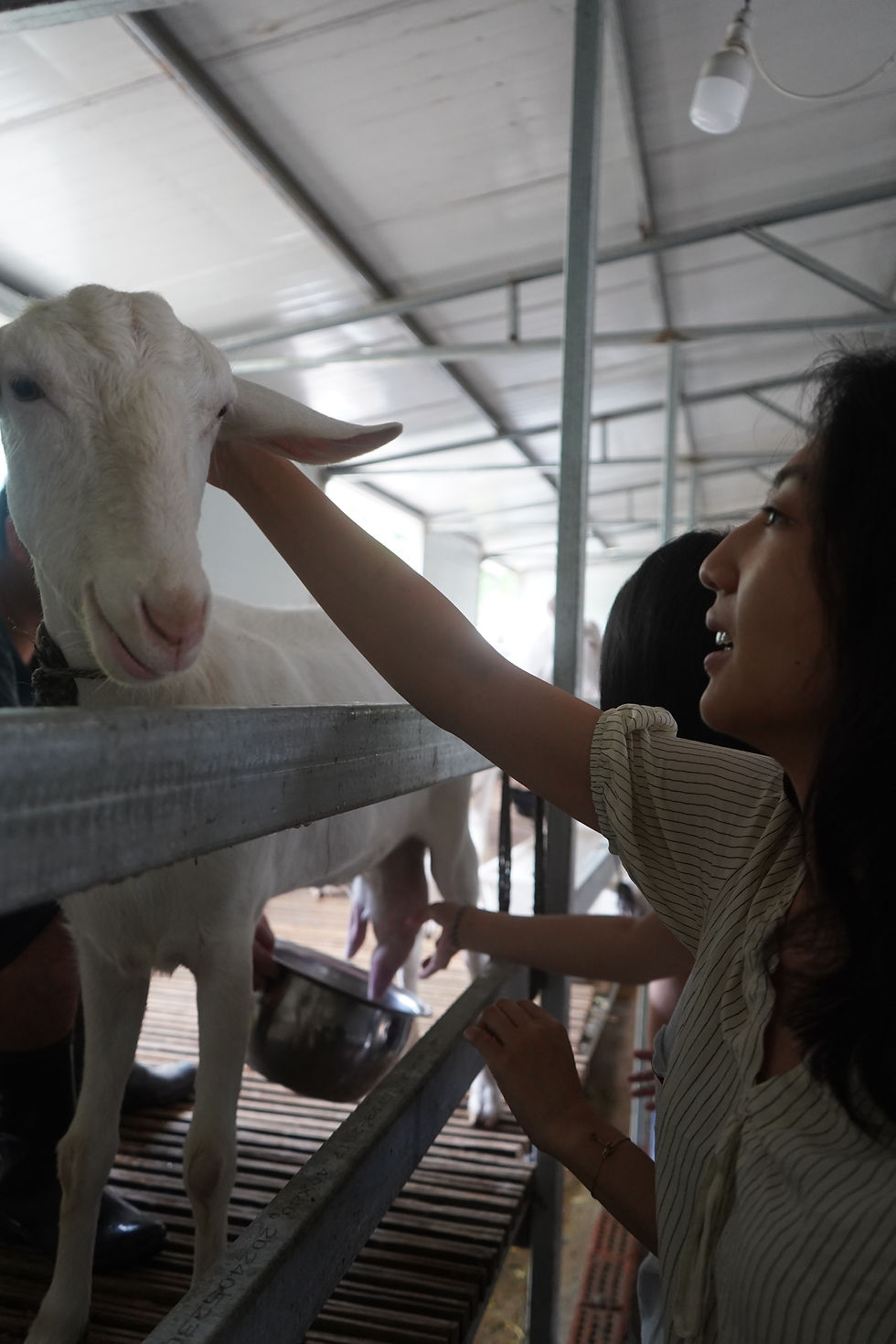
Thank you, Shuang, for your amazing insights!!
More spotlights to come! To learn more about CINGS and their work and upcoming programming, check out their website www.cings.org and follow them on LinkedIn.